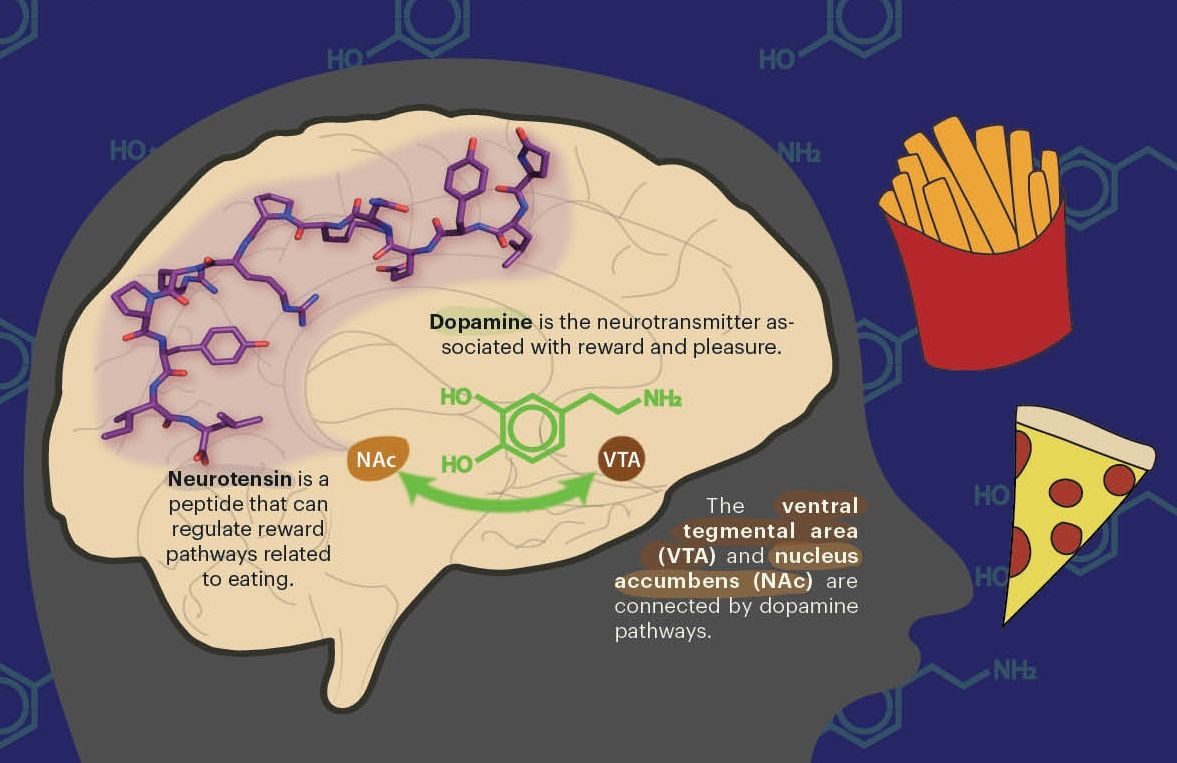
Are crispy french fries, cheesy pizza, and creamy milkshakes just not as enjoyable as they used to be? This decreased satisfaction could be due to alterations in your brain’s dopamine pathway. Dopamine is the chemical messenger, or neurotransmitter, in our brains most associated with feelings of reward and pleasure. Eating, particularly calorically dense—and delicious—foods, can trigger dopamine release from certain parts of the brain, causing us to feel happy and gratified. Interestingly, prolonged ingestion of high-calorie foods can lead to decreased eating pleasure, both in animal models and in humans. Could understanding the brain’s reward pathway help us explain how a calorically dense diet might alter the eating experience?
To answer this question, the lab of Dr. Stephan Lammel in the Department of Neuroscience discovered a potential mechanism underlying this common report. Mice were fed a diet high in fat, leading to weight gain as well as reduced interest in calorically dense foods that they typically enjoy, like strawberry jelly. Simultaneously, these mice showed reduced firing activity of dopamine-releasing neurons that project between two brain areas, the lateral nucleus accumbens and the ventral tegmental area, which play a vital role in feelings of reward and motivation. Through sequencing, researchers uncovered that these mice had reduced levels of a peptide called neurotensin within this specific neural pathway, likely causing the observed diminished activity. When researchers expressed high levels of neurotensin and fed the mice a high-fat diet once more, the mice maintained a normal desire for calorie-rich foods despite also experiencing fewer diet-associated challenges, like weight gain. This key finding suggests that neurotensin is important for upkeeping a functional pleasure and motivation pathway.
Surrounded by easily accessible high-calorie foods, this research helps us begin to understand why eating might become a less pleasurable experience over time. How the brain processes rewards is one signal among many that helps us determine what we eat, how much we eat, and how we feel when eating. While losing reward signals may further contribute to unhealthy eating behaviors, restoring these signals by selectively altering neurotensin activity may both return joy to eating and improve overall health outcomes.
This article is part of the Fall 2025 issue.